
January 30th, 1972 stands as one of the deadliest – and momentous – dates during three decades of violence in Northern Ireland.
In the streets where events unfolded – the memories of Bloody Sunday are painted on the buildings and seared in people's minds.
A public gathering was conducted on a chilly yet clear afternoon in the city.
The march was challenging the practice of imprisonment without charges – detaining individuals without trial – which had been implemented in response to an extended period of violence.
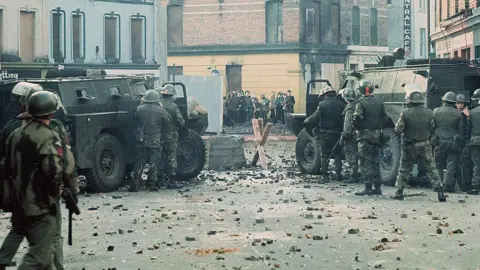
Military personnel from the specialized division killed multiple civilians in the neighborhood – which was, and continues to be, a overwhelmingly nationalist area.
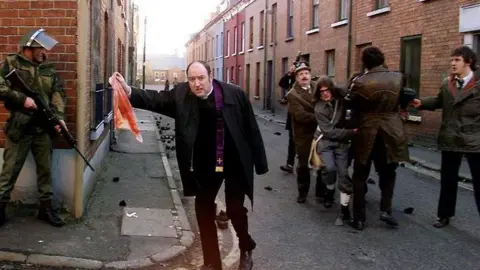
One image became particularly memorable.
Images showed a clergyman, the priest, waving a bloodied cloth as he tried to protect a crowd moving a teenager, Jackie Duddy, who had been killed.
News camera operators captured considerable film on the day.
The archive contains Fr Daly explaining to a reporter that troops "gave the impression they would fire in all directions" and he was "completely sure" that there was no justification for the discharge of weapons.
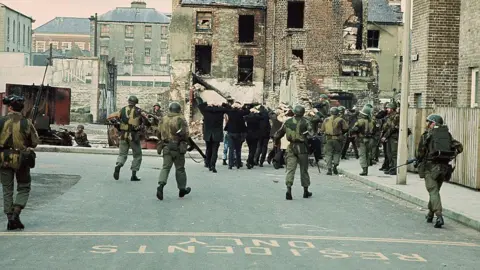
That version of the incident was rejected by the first inquiry.
The Widgery Tribunal found the soldiers had been shot at first.
In the peace process, Tony Blair's government established a new investigation, after campaigning by family members, who said the initial inquiry had been a inadequate investigation.
That year, the conclusion by the inquiry said that generally, the military personnel had initiated shooting and that zero among the individuals had been armed.
The contemporary government leader, the Prime Minister, issued an apology in the Parliament – saying deaths were "without justification and unjustifiable."
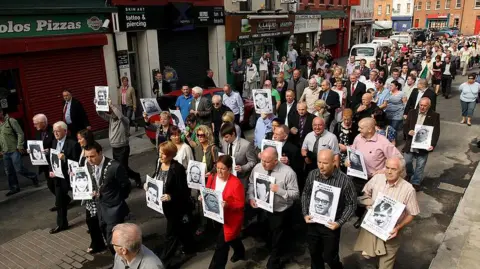
The police started to investigate the matter.
One former paratrooper, referred to as Soldier F, was brought to trial for murder.
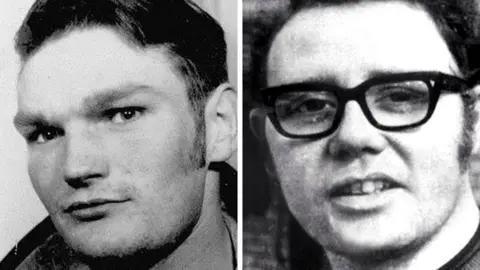
Indictments were filed concerning the fatalities of one victim, twenty-two, and 26-year-old William McKinney.
Soldier F was further implicated of trying to kill multiple individuals, additional persons, Joe Mahon, another person, and an unknown person.
Remains a judicial decision protecting the soldier's identity protection, which his lawyers have maintained is required because he is at risk of attack.
He told the investigation that he had only fired at individuals who were carrying weapons.
That claim was rejected in the final report.
Evidence from the examination could not be used immediately as testimony in the criminal process.
In court, the veteran was screened from view with a blue curtain.
He made statements for the initial occasion in the proceedings at a session in late 2024, to respond "not guilty" when the allegations were read.
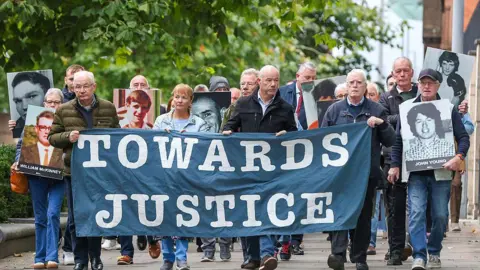
Relatives of the deceased on that day travelled from Derry to Belfast Crown Court every day of the proceedings.
One relative, whose brother Michael was killed, said they always knew that hearing the proceedings would be emotional.
"I visualize everything in my mind's eye," he said, as we walked around the main locations referenced in the proceedings – from Rossville Street, where Michael was killed, to the adjoining Glenfada Park, where James Wray and William McKinney were fatally wounded.
"It even takes me back to my location that day.
"I helped to carry my brother and place him in the vehicle.
"I went through the entire event during the proceedings.
"But even with enduring everything – it's still valuable for me."